






First, we need to understand how weight gain actually works.
Building weight, especially muscle mass, requires a smart energy surplus, the right protein intake, and strength training to stimulate growth. The body wants to maintain balance. If you give it too little energy, nothing happens. If you give it too much, it stores unwanted fat. The goal is to find the zone where muscle grows without storing fat.
Energy balance, the mathematics behind weight gain
- The body gains weight when energy intake is greater than energy expenditure.
- The excess is stored as fat, built into muscles or used for recovery and training.
A safe surplus for most people is 200–400 kcal per day. This is enough for about 0.25–0.5 kg of weight gain per week with a reasonable proportion of muscle mass if strength training and protein are in place.
How much energy do you use every day?
- Basal metabolic rate (BMR) : the resting energy expenditure that keeps you alive
- NEAT : all unconscious movement such as standing, walking, washing dishes, and gesturing
- Training energy : what you burn through planned activity
- Thermic effect of food (TEF) : energy required for digestion
When you gain weight, NEAT often increases spontaneously when you eat more. It can eat up some of the excess. So adjust your intake if your weight doesn't move after two weeks.
Protein needs for weight gain
| Type of person | Rec. protein (g/kg body weight) | Comment |
|---|---|---|
| Beginner at the gym | 1.6g/kg | Sufficient for maximum protein synthesis |
| Experienced strength trainer | 1.8–2.2 g/kg | Higher needs for optimal muscle building |
| Elderly over 60 years old | +0.2 g/kg compared to younger | Muscle protein synthesis is slower |
| Overweight who wants to build muscle | Calculate fat-free mass or target weight | Avoid sky-high amounts without benefit |
Women need about the same grams per kilogram as men when training and goals are the same.
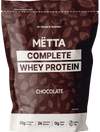
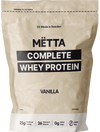
Mëtta is a simple solution for high-quality protein and extra calories without unnecessary sugar.
Practical examples of excess and weight rate
Person B has a total need of 2700 kcal
| Daily surplus | Expected weight gain | Common effect |
|---|---|---|
| 200 calories | ≈ 0.25 kg per week | High percentage of muscle, low fat gain |
| 400 calories | ≈ 0.5 kg per week | Good muscle/fat balance |
| 600 calories | ≈ 0.7 kg per week | Faster weight, more fat storage |
| 900 calories | ≈ 1 kg per week | High risk of unnecessary fat |
Adjust the excess if the weight does not move according to plan or if the fat gain becomes too great.
Training that builds muscle
- Prioritize progressive strength training, full body 3–4 sessions per week
- Stick to 3–5 sets of 6–12 repetitions in basic lifts such as squats, deadlifts, bench presses and rows
- Increase weights or reps each week. Try to make the smallest possible increase, but to keep increasing in something. That's the key!
Plan for bumps and obstacles in your path forward
- Prepare energy-rich snacks with a good nutritional profile
- Keep nuts or protein bars in your bag when work gets hectic
- Here too, Mëtta is perfect!
- Increase portion size at main meals if you notice your weight is stagnant
Summary
- Create a surplus of 200–400 kcal and track your weight each week
- Aim for 1.6–2.2 g protein per kg of body weight depending on training level and age
- Strength train progressively 3–4 sessions a week
- Use Mëta and energy-rich snacks to meet your energy and protein goals
- Adjust intake if weight or composition does not develop as planned
- Sleep and manage stress to maximize muscle growth and minimize fat gain